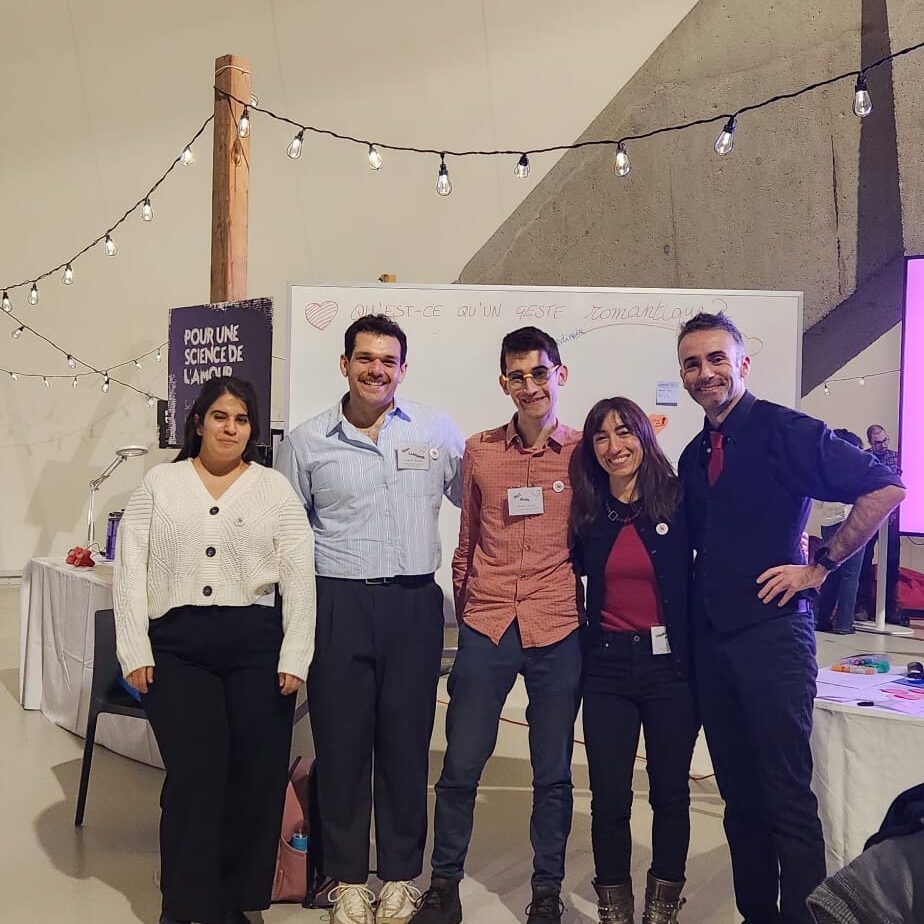
Researchers’ Night
Our booth, titled For the Science of Love, was divided into three thematic areas, each exploring an aspect of contemporary intimacies through the research conducted within the ERICA Chair.
What is a romantic gesture?
The first area featured a participatory activity centered around the question “What is a romantic gesture?”, inspired by the Chair’s flagship project, the project MACLIC.
Led by Noé Klein — PhD student working on intimate relationships and dating apps — Félix Dusseau — PhD, specializing in non-monogamous relationships — and Chiara Piazzesi — head of the ERICA Chair and project leader of the MACLIC project — this booth invited participants to write on a sticky note what they considered to be a romantic gesture, then place it on a Cartesian grid ranging from more to less romantic and from more to less exceptional.
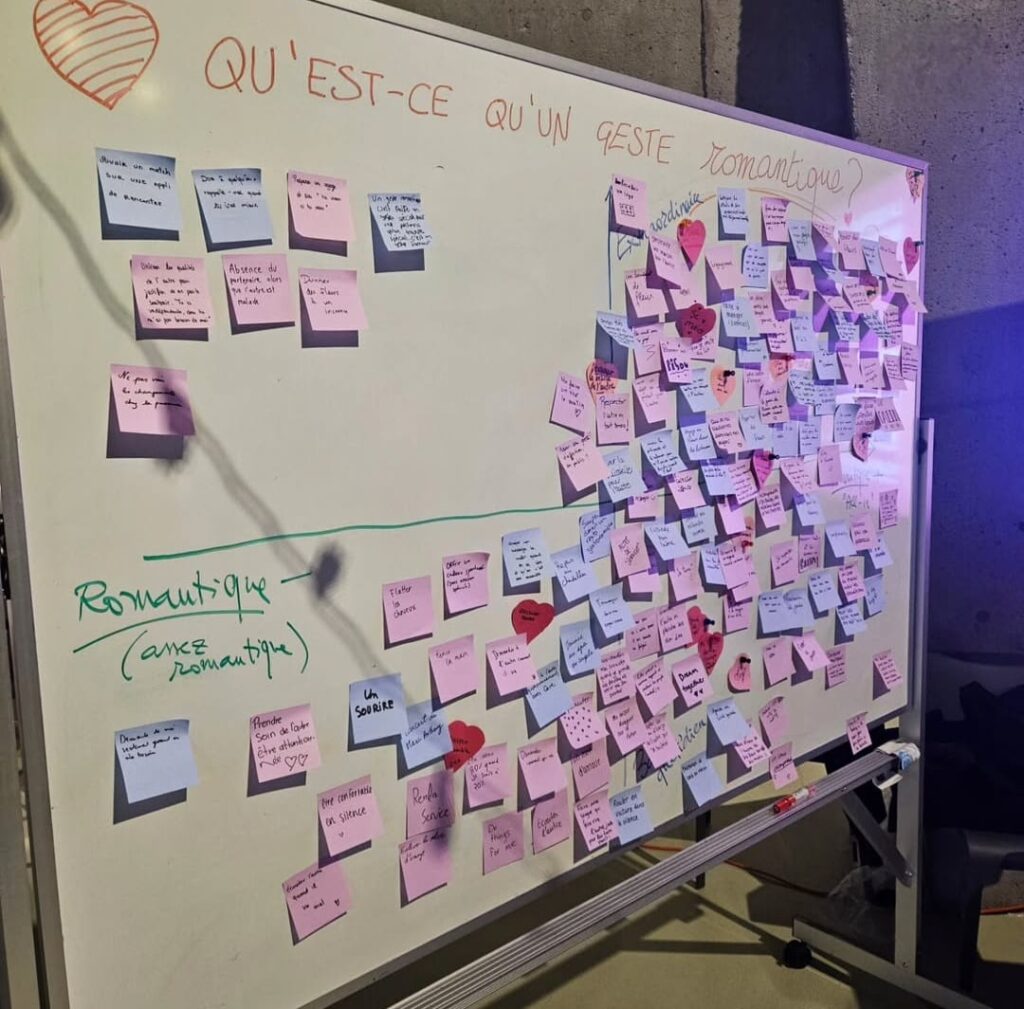
The playful approach, focused on individual experiences, immediately captured attention: many participants stayed for extended periods to discuss, compare their perspectives, or examine the research data. These exchanges revealed a genuine need to engage in dialogue about intimate experiences, to situate them socially and culturally, and to rely on scientific frameworks to understand one’s own emotional journey.

“Masculinities and Feminisms”
The second area focused on masculinities from a feminist perspective, presented by Sony Carpentier — a PhD student researching masculinities in connection with feminist movements.
The topic sparked strong interest: the audience, highly engaged, asked many questions about concepts such as the rise of masculinism or “toxic masculinity.” The direct interaction with visitors was particularly stimulating, highlighting how deeply these issues resonate with people’s personal experiences and reflections.
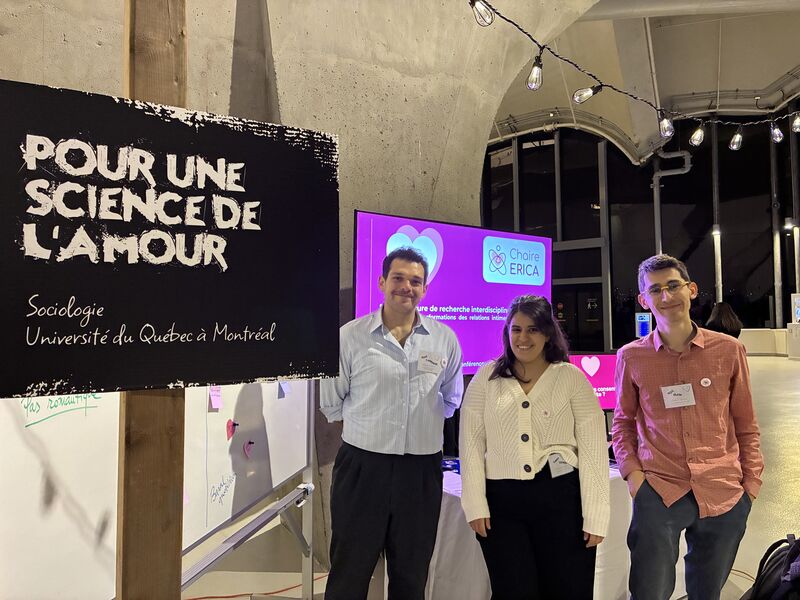
Let’s talk about feminist consent and the Female Gaze!
The third area explored power and control dynamics in intimacy, led by Lamia Djemoui — a PhD student researching serial representations of female sexualities.

The audience was invited to reflect on representations of consent, the male gaze and the female gaze, as well as the symbols present in contemporary audiovisual works (notably The Handmaid’s Tale). The discussions revealed the public’s curiosity about these conceptual tools and how they shape our perceptions and practices of love.
Our research in a few photos…


What we take away from this participation:
All of these interactions demonstrate the public’s strong interest in spaces where intimate experiences can be shared, contextualized, and informed by research. The richness of the discussions, the diversity of questions, and the evident desire to understand the changes in affective relationships confirm the importance of offering and expanding this type of event.